

Typhoon Rammasun struck the Philippines on Monday, July 14, with an estimated wind speed in excess of 80 mph. The typhoon came through the highest typhoon risk area, Albay Province, just north of Tacloban in Leyte; where Typhoon Haiyan devastated the region in November 2013.
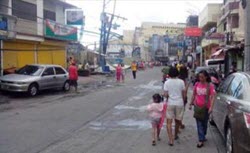 This time the people of the Philippines were prepared thanks to multiple warnings issued by their National Disaster Risk Reduction and Management Council (NDRRMC). This preparedness system was put to the test as the center of the storm passed through the city of Legazpi.
Nature's Fury Unleashed
Since July 15, airlines have canceled flights into Legazpi and surrounding regions as residents braced for the worst case scenario. By lunchtime, there were only scattered showers. Later that day, as the typhoon system approached rain and wind began to batter the city. As the fierce storm pressed in on the city, government employees were helping those who had not made it home out of the harm's way.HOPE worldwide's Global Disaster Response Coordinator, Charles Ham, was in the Legazpi City during the storm. He described it as: "The wind kept pounding the houses and buildings in Legazpi. The water was 30 cm (11.8 inches) deep on the street near the hotel where I was staying. As the night feel, the storm became more intense. Billboard signs flew all over the streets, as screeching sounds caused by the wind were buzzing in the air. The wind and rain were coming down so hard that the canopy on our hotel was not able to keep water away from our third floor room. Water came through the small gaps of rubber sealants around the windows. The lobby was inundated as well."
Charles was on his way back from a monitoring visit in Tacloban and Cebu, where HOPE worldwide is restoring communities through various health, housing, nutrition, livelihood, and children's initiatives in the wake of Typhoon Haiyan. He had stopped in Albay Province to assess the risks of typhoon and volcanic activity as well as evaluating the community's recovery from the devastating 2006 Typhoon Durian when Rammasun arrived.
At 6:00 a.m. on July 17, 2014, The NDRRMC reported that 38 fatalities and eight people were missing. The typhoon affected 192,131 families (1,006,360 persons) while 100,500 families (530,689 persons) are staying in 1,219 evacuation centers. There were 7,002 houses destroyed and another 19,257 damaged. As many as 80% of the houses affected are in Region V (Bicol).
After the Storm
Immediately following the storm on July 16, citizens demonstrated their resilience as they picked up the litter from the streets and the pieces of their lives. One taxi driver described how he lost his roof, and how he was planning on saving 15,000 pesos to rebuild it. Ramir Bodigan, a church leader from the Metro Legazpi Church of Christ, also told about a disciple losing their roof. But the church will help her repair her roof quickly with the church's calamity fund. Another compassionate citizen was seen handing out food and water to a homeless person who survived the storm.As the night fell on July 17, the street of Legazpi was full of street vendors, trying to make a living to survive another day. Police officers were present to prevent any social unrest like what they had seen in Tacloban after Typhoon Haiyan. Two days after the typhoon, electricity is still down, and long lines are a common scene at ATMs across the city. An internet connection is also a scarce commodity. Despite the lack of electricity, people are back on the streets in Legazpi. Businesses and offices started to function with the help of generators. The expressions on the residents belied their pain of loss - instead they reflected strength to face another day.
Steps to Recovery
HOPE worldwide is working side by side with its affiliate in the Philippines along with local partners and volunteers in providing relief, rebuilding communities and preparing for disasters. We are continuing to monitor the situation and how we can best help affected communities.For inquires and further information, please contact:
HOPE worldwide, 1285 Drummers Lane, #105
Wayne, PA 19087, USA
www.hopeww.org tel: +1-610-254-8800
Charles Ham, Global Disaster Response Coordinator, email: This email address is being protected from spambots. You need JavaScript enabled to view it.">This email address is being protected from spambots. You need JavaScript enabled to view it.