Women Today
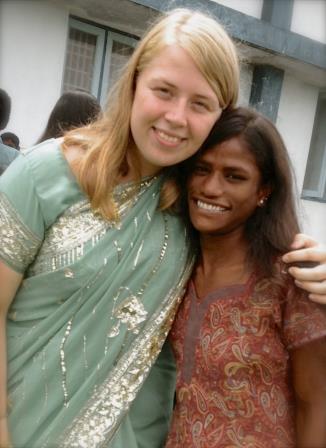
My Sister’s Joy
Six missed calls. One five-minute conversation, the sounds of which still haunt me. One last time braiding her hair, a hastily packed bag, twenty minutes later and she was gone, this time for good. Her father was barely breathing. We didn’t have any details, only that she and her brother had to come immediately. I watched her face grown smaller and smaller as the van drove away from the orphanage. I cried for what her life was becoming; I cried for the pain I knew she would experience, and selfishly, I cried because, in my emotion clouded head, I felt that her deadbeat father drinking himself to death had caused her to leave me. I was angry, sad, bitter, but mostly, overwhelmed. Was this really even happening? I was frozen for what seemed like hours. Eventually I got up, wiped away the tears, and went to find my phone. I knew the call would come soon.
Rewind to May of 2012 when I originally came to India. I had little expectations and only the intent of leaving with no regrets. I knew that where I was going would be dirty, the food spicy, the air polluted, and the landscape crowded. I wanted to change; change my perspective and change my heart. How I was going to accomplish that I was not yet sure. So I boarded a plane with seven of my closest friends and set off to spend my summer just south of Chennai in the Southern state of Tamil Nadu.
Immediately India captivated me with its sounds, colors, and people. Everything seemed to be screaming out at me. From a tourist’s perspective, the India I first saw out of the window of our car was mesmerizing. Pulling up to the orphanage, however, I was struck by its simplicity; a stark contrast from the cities I had just driven through on our two hour ride from the airport. Unlike the building, the children were absolutely beautiful. Their faces looked like the subjects of National Geographic articles. I couldn’t help but fall in love. The young ones immediately clung to me, hungry for attention, eager to learn my name and everything about me. We played games, ate mangos, and taught English, all in the first few weeks there, and in the beginning they seemed happy.
I was first made aware of the harsh reality of their lives when I began to build deep relationships with the older girls of the home (ages 15-18). On the outside, they seem held together, capable of forcing a smile that may seem genuine to an occasional visitor. I have since learned the deceitful powers of defense mechanisms. A little digging quickly reveals just how intricate a façade they can create. Breaking through those façades proved to be almost too much for me handle on my own, and an incredibly long process I sometimes feel unqualified to help with.
Those façades are most likely to fall at night. Nighttime has an interesting effect on the orphanage and the kids. Only after the sun sets and the moon rises are guards let down and prayers offered up for healing from the disastrous disease they are all subjected to. Did I mention? All the children are HIV+. It was shocking to me as well. However, hearing that diagnosis is very different from actually experiencing its effects. Some days, I forget about how sick they are as I watch them play “house” and run around pegging each other with dodgeballs. On other days, it seems as if their disease is staring me in the face, making me sick with grief. Skin infections, outrageous scars all over, vomit-inducing coughs, and painful stomach ulcers are their norm. But perhaps the worst effects of HIV are those that are not seen with the eyes but felt with the heart. The emotional tragedies: the dead parents, siblings, and friends, the feelings of abandonment and alienation, the realizations of not being able to marry the one you love. These symptoms are more difficult to treat, and like the physical ones, they can sometimes prove terminal.
Watching the children battle these emotional symptoms and helping them fight to overcome them has become my life. This purpose is best illustrated in my relationship with one of the older girls, Sathya. It bothers me that I do not remember the very first time I met Sathya. She is such a quiet girl and makes every effort not to stand out. Years of neglect and emotional abuse have left her completely insecure of her ability to be loved. She was also pretty uneasy about speaking English, something we are still working on a year and a half later. As I started becoming closer with all of the children, Sathya started hanging around me more and more. It seemed like she was always there, intently looking at my face, as if making every effort to understand what I was saying. Even still, in the beginning, she kept an emotional distance.
Many late night talks, hours of listening to her cry, and days spent doing everything in my power to try and encourage her, and somehow we were bonded. It’s not something I can explain with words, nor do I even think I would want to try. She is my sister. She has my heart and I have hers. Not an hour passes that I don’t wonder if she is okay, if her month long cold is finally gone, if her younger sister is still working in the same shady factory, or if her mom is still just as neglectful. Sathya and I have experienced most of the happiest and saddest days of our lives together, spent morning after morning praying to God in two different languages at 4 am. Perhaps it was the sharing of those times that created the bond God gave us. I carry her picture with me everywhere, tucked inside of my phone case, and to anyone who has ears, whether they want to listen or not, I tell them about her.
Reasonably, the day I left India for the first time on October 21, 2012, was full of tears. At the time, I was returning to America without a job and with little hope of being able to visit India again soon. I was deeply sad, but determined. That determination produced in me a work ethic I had never had, and a short six months later on May 5th of this year I boarded a plane to take me home, to my real home, and back to my sister. Little did I know it was the beginning of the craziest (most dramatic, most emotional, most unbelievable) summer of my twenty-one years.
Sathya’s life story would most definitely make you sad, and if written perfectly most people would end up crying. She deserves an entire book to be written about her, I believe she is that worthy. But here are some highlights to fill you in. She is the oldest of three children, born to HIV+ parents, the older sister to two HIV negative siblings. She was put in the orphanage when she was about six years old. I don’t have the full story of how that decision was made; it’s something Sathya has very few words about. Her mother, never having attended a day of school in her life, cannot even write her own name. Her father is an alcoholic. Although at times loving, he is prone to violence when under the influence. I knew there was something going on within her family the first day I arrived back at the orphanage on May 7th, 2013.
Her tears were enough to convince me that something major was happening. To this day I am still a little confused as to why she never told me sooner. I call to talk to her and the other children once a week while I am here in the States. Maybe she was afraid of upsetting me, or maybe she did not want to face the fact that because her father was sick, there would only be four short days we would both be at the orphanage together. When she did return to her village for the first time, the event was nothing short of heart wrenching. Even writing about it now, I am easily brought back to the moment I hugged her goodbye and watched her step into the van. The emotions flood me once again as I remember the bitterness in my heart as I thought how unfair it seemed for her to be leaving to go stand vigil for a sick father she barely had any memories of. I remember not being able to control my tears as I realized what was happening to her life. I recall thinking, “this isn’t normal, seventeen year old girls should not have to be dealing with all of this”. Suddenly, the full weight of my sadness hit me as I realized that she was leaving to go watch her father waste away and most likely die from the same toxic disease that lives inside of her.
I can’t imagine what that would do to someone; to sit and watch another person die of an illness you know is also coursing through your veins, passed to you while you were an innocent infant. My sadness turned to anger as I questioned whether justice exists in this world. For a time, I even wrestled in anger with God. Something I may have thought was unspiritual or sinful in the past, I now see as an important step in God strengthening my faith through this time of life.
Through an entire book’s worth of events (from Sathya living at a tuberculosis infected hospital nursing her dying father, to her traveling back to her village to pick up her little brother who had not eaten in three days, to me pleading with her mother and the staff of the orphanage to allow her to return to the hostel) my sister came home at the end of May. Although it was nowhere near the end of the ‘war’, in that moment, for us, it was a small victory.
I wish I could say that her father got better, her mother became more loving, her younger sister didn’t have to work in the factory anymore, they have discovered a cure for HIV, and that I am still in India by her side. But a summer of this magnitude could not have ended so serenely.
I knew what was coming that morning I saw the six missed calls from her mother. I knew her world was about to crumble and I wasn’t sure if I was prepared enough to help her. The screams her mom released over and over again on the phone were audible from the complete opposite side of the room. Frozen, and crying, Sathya quickly handed the phone off and simply started packing her bag. I rushed to braid her hair and help make sure she took everything she needed. I filled my large water pink bottle for her six hour bus ride, put her things in the van, watched her again slide in and close the door, looked into her tear-filled eyes, and was unable to even form the words “good bye”.
Just two short hours after she had driven off, her sister called to confirm that her father had just died. We had no way of telling Sathya; she and her brother were traveling on their own without a cell phone. Even so, how would I have told her myself?
Still, even today, I don’t think I have gotten over her father’s death yet. Some may think that is a bit dramatic and self-centered of me to say as he was not even my own father. What I really haven’t processed are the sounds and memories of Sathya’s sobs and cries, of sitting and listening as she cried for her father but never questioned God’s love for her, and as she quietly accepted the trials of her life. I haven’t had the heart or mental capacity to be able to process the amount of surrender contained inside of her little body. She puts the “problems” of my life into perspective by her ability to seek joy in times of unimaginable sorrow. I have seen her do it, almost as if she just ritually hands over her burdens for Jesus to carry. It doesn’t matter what is going on in her life she always chooses joy. She chooses every day to trust, to be faithful, and to press forward. She is undoubtedly the most incredible human being I have ever met, and I am never more honored than when she looks at me and calls me her “Akka”, her big sister.
I encourage anyone reading this to seek out relationships with individuals you know are strong in an aspect of their character that you need help in. Two years ago I had no idea of the relationships God was about to provide me, nor was I really seeking out people who have learned to embrace surrender. But I can now confidently say that through Sathya’s friendship, through watching her trust God with her unimaginable hurt, through seeing how she always and without fail went to God first with her trials, I know that God was aware of what I needed and when. While I had to travel to India to find the person I am most challenged by, your “person” may be right next door, waiting for a friend to trust with the pain of their life. So speak! And never stop. Love them! And allow yourself to be transformed by their example.
Big Faith in a Small Church
The Trichy church started about ten years ago when HOPE worldwide opened an orphanage in this town of South India. Since then the church has been led mostly by secular leaders and this continues to be the case today. The membership has grown to almost 100.
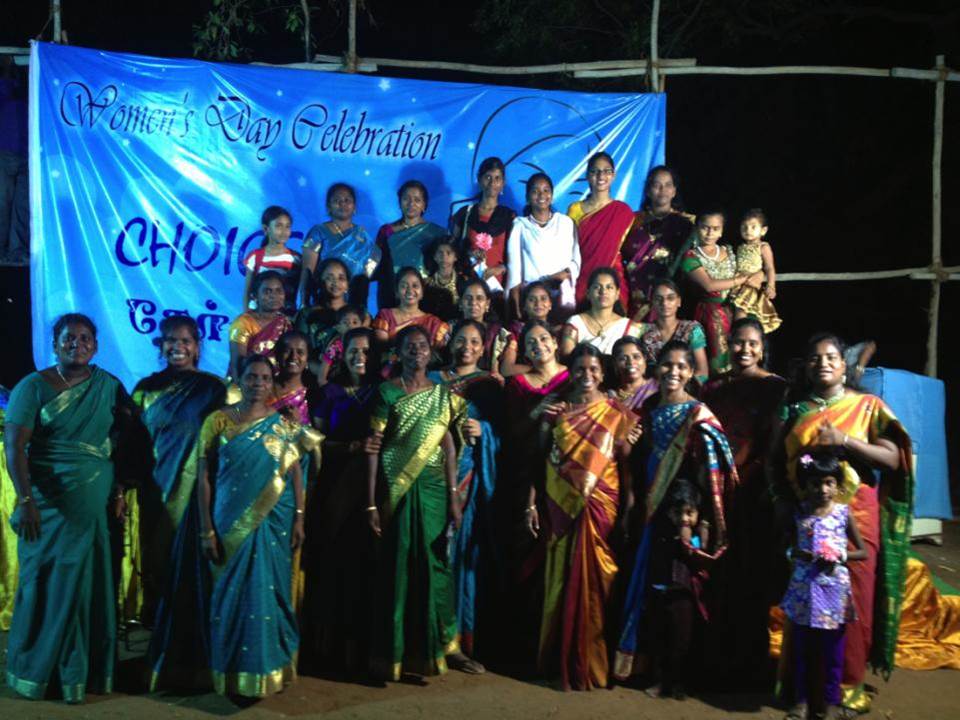
The church has a real sense of family with a healthy mix of youth, families, and older people. Everyone contributes their skills and talents and helps to lead, volunteer at the orphanage, and generally support one another. A few months ago the women of the church organised a women's day event. They held it outdoors. They had set high goals of attendance and they met those goals. Over 300 women came to the event.
They had also prayed to see 12 women baptised that month. For such a small congregation that took a lot of faith. God answered their prayers and 12 women were baptised!
One of the most encouraging things is seeing the teens raised in the orphanage become disciples. Another teen baptised is Sarah, the daughter of the couple who are behind the start of this congregation.
God is blessing the hearts of the Christians who understand the full meaning of the Gospel, sharing our faith coupled with helping the underprivileged.